
The Real Estate CPA Who Actually Builds
Most CPAs learn real estate from the returns that land on their desk. We learned it by buying, developing, and managing our own. 50+ units. We put that experience behind every engagement, in every state.
What a real estate CPA actually changes
Real estate is the most tax-advantaged asset class in the code, if someone works the levers. Depreciation and cost segregation decide how much of your cash flow is taxable. Real estate professional status decides whether losses offset your other income. Entity structure decides what happens when you sell, refinance, or bring in partners. A general practitioner touches these once a year. A real estate CPA works them all year, on purpose. The goal is to improve after-tax cash flow through planning that fits the property, the owner, and the applicable tax rules. Results depend on your circumstances.
Planning and preparation, one team
We connect tax preparation with year-round planning. The plan drives the return. Our team evaluates tax-saving strategies and carries the decisions through to preparation and review. That includes tracking elections, depreciation, and carryforwards. Where appropriate, we arrange and review cost segregation studies prepared by independent providers; we do not perform those studies ourselves.
Who we work with
The operator difference
Our founder is a CPA who is also a CCIM, a licensed real estate broker, and a licensed general contractor, and the firm develops multifamily property of its own. That's not a bio flourish. It means when we advise on a purchase, a build, or an exit, we've made the same decision with our own money. We know which numbers on a pro forma are real and which are wishes.
What we're deep in: prep and planning
“Advise RE has helped me and my family out as well as my clients save on taxes. I also find their knowledge on the real estate market incredibly valuable, especially around real estate development.”
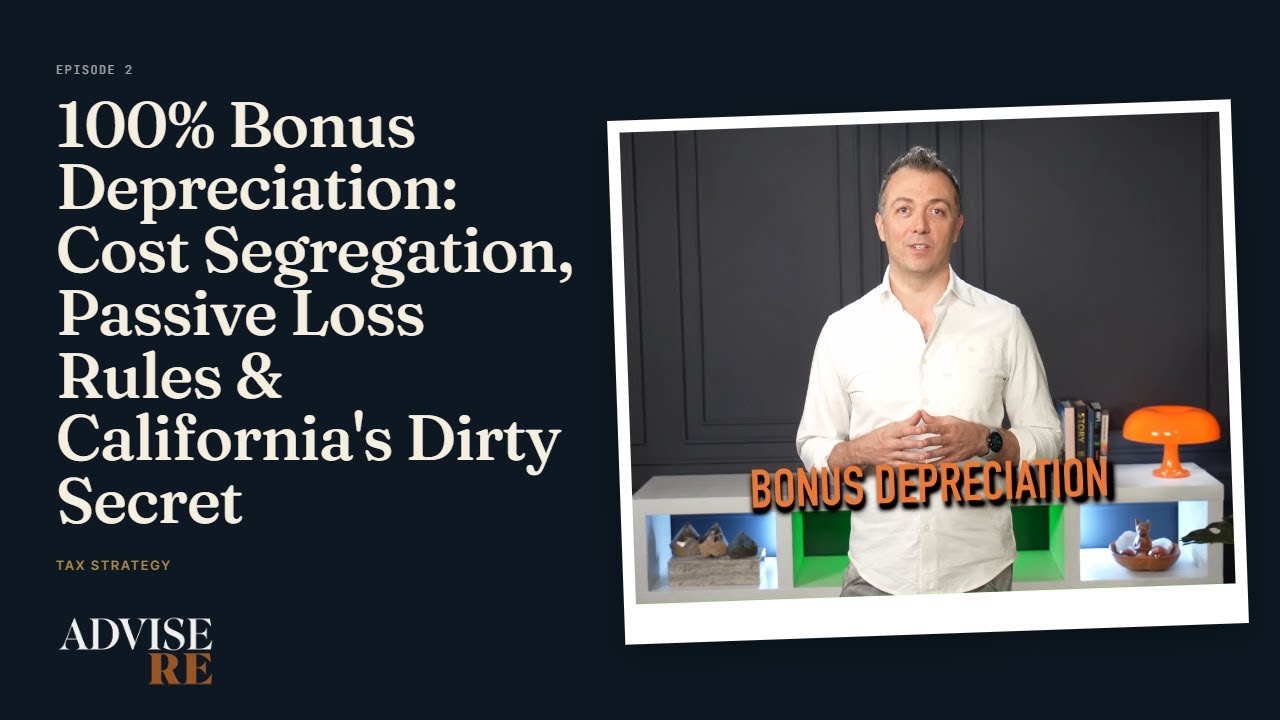
100% Bonus Depreciation: Cost Segregation, Passive Loss Rules & California's Dirty Secret
Watch on YouTube → @AdviseREFair questions.
Why do I need a real estate CPA instead of my regular accountant?
If real estate is a side note in your finances, you may not. Once property is a real part of your income or net worth, the specialized levers (depreciation strategy, professional status, exchange planning) are worth more than the fee difference, usually by a wide margin.
Can rental losses offset my W-2 or business income?
Sometimes. That's exactly what the passive-loss rules decide. Your income level, real estate professional status, and short-term-rental participation can each open the door. It's the most common question we get, and the answer is personal enough that generic internet advice is usually wrong in both directions.
Should I hold my rentals in an LLC or a holding company?
Usually the real question is which entity, in which state, owned in what order, and whether the complexity is worth it at your size. Set up early alongside your attorney it's cheap; done late it can trigger transfer taxes, reassessment, and lender problems.
My past returns never took depreciation seriously. Is it too late?
No. Missed depreciation can usually be caught up in the current year through an accounting-method change, without amending old returns. It's one of the most common wins with new clients.
Do you work with investors outside California?
Yes: most states, all time zones. We're based in Los Angeles; the work is national.
Do you handle syndications and partnerships?
Yes, on both sides: GPs who need the partnership return and K-1s done right, and LPs who need those K-1s to actually flow through their return correctly.
What does it cost?
Depends on the portfolio. But you'll know the exact scope and fee before you commit to anything. No surprise invoices.
How do we start?
A short form about what you own and where you're headed. A person reads it, and if we're a fit, our calendar link is in your inbox within one business day.
Tell us what you own.
A short form about what you own and where you're headed. A person reads it, and if we're a fit, our calendar link is in your inbox within one business day.